


AI has shifted how test teams approach quality work and bug hunts in software projects. It spots patterns across massive logs and runs that would crush a human tester if left alone, and it reduces the grunt work that soaks time.
By learning from past failures and successes, models suggest what to check next and what might break under odd inputs. The practice makes testing feel more like smart exploration and less like a never ending task of rote checks.
Test Case Generation And Design
AI tools can read code, user flows and historical test results to propose candidate test cases that mirror real user behavior. They often apply basic stemming to group variant tokens and use n gram models to surface common phrase patterns that matter in input fields.
That output gives testers a richer starting set than manual scribbles and helps spot edge routes that humans might skip.
Blitzy enhances this process by suggesting test cases that are specifically tailored to the project’s unique behavior patterns, providing testers with higher coverage early on. A few model driven cases can deliver a shot in the arm for coverage early on.
Test Prioritization And Selection
When a suite swells to thousands of checks, AI ranks which ones are most likely to fail so the team spends time wisely. Models weigh recent changes, file touch rates and failure history to score tests and highlight hot spots for quick review.
This scoring keeps high risk items in view and trims the time spent running low value checks nightly. With smarter ordering, feedback loops shrink and the pace of fixes speeds up.
Automated Test Execution And Self Healing
Scripts often break when elements move or names shift in UI code, and AI can make automation more robust by finding alternate selectors and patterns. It learns which locator types survive refactors and suggests swaps so a test keeps running rather than stopping at the first snag.
That reduces brittle maintenance and frees engineers from constant script babysitting chores. In many shops the result feels like automation that adapts rather than one that cracks under minor changes.
Defect Detection And Triage
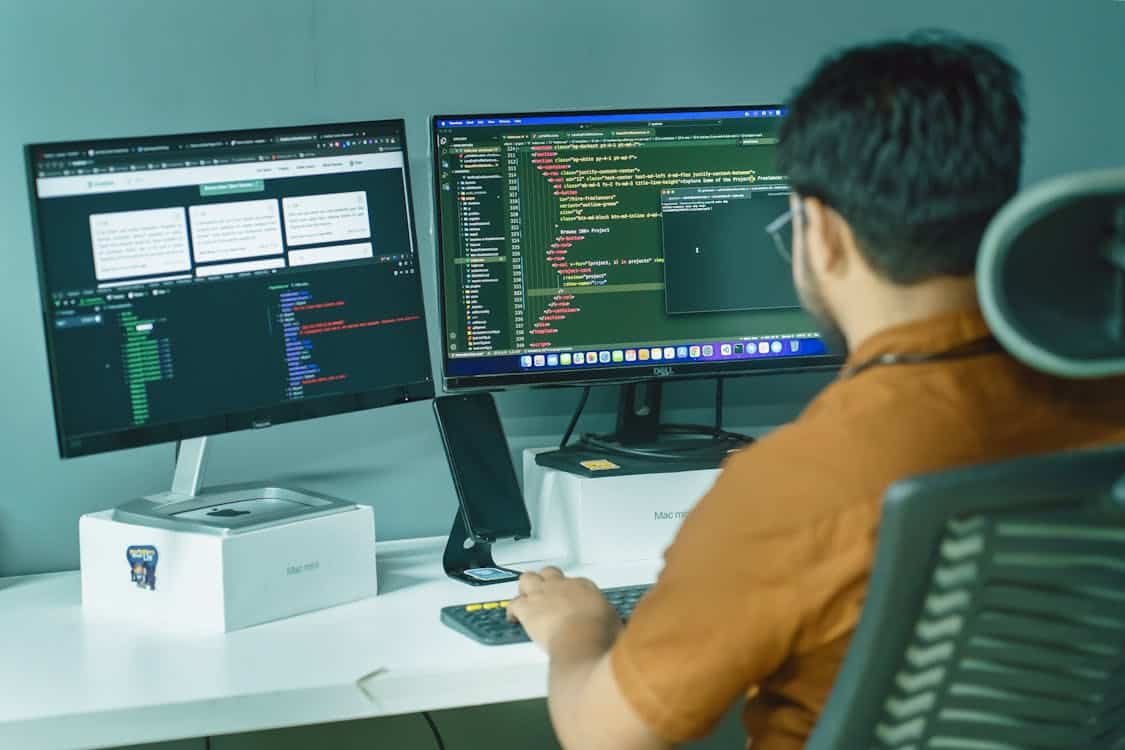
Beyond failing assertions, AI hunts for anomalous logs, odd metrics and rare sequences that precede crashes or slowdowns. It clusters related failures into groups and proposes labels that help human triage move faster and avoid duplicate bug reports.
Natural language summaries from models can point to likely root causes and past fixes that solved similar problems. When the ball is in the court of a developer, the issue ticket often arrives with enough context to speed the patch.
Performance And Load Testing
Generative models and predictive analytics create scenarios that mimic bursty traffic and user mixes that a lab might miss if tests follow neat scripts. They can estimate where latency will spike under combined stress and suggest probes to validate bottlenecks in real world terms.
This type of test finds cases where a small spike in one service creates a chain reaction across the stack. The practice helps teams avoid nasty surprises when traffic behaves oddly in production.
Test Data Management And Privacy
AI helps synthesize realistic data sets when live data cannot be used because of privacy rules and compliance needs. It can learn distributions from safe samples and spin up plausible values that preserve relationships between fields without exposing sensitive entries.
That preserves realism for functional checks and load runs while keeping private records out of test environments. Testers get the best of both worlds, realistic behavior and less risk.
Continuous Testing And CI CD Integration
When CI CD pipelines run many times a day, AI checks can gate merges by predicting risk of a change before it ships to main branches. Predictive models mark builds as low risk or high risk and can even suggest which additional checks to run on a given commit to be safe.
This reduces wasted cycles in the pipeline and keeps developers from waiting forever for one long test run. The net effect is a quicker flow from code to deployment with fewer nasty surprises later.
Human Collaboration And Skill Augmentation
AI does not replace the craft of a skilled tester but it acts like a thoughtful partner that clarifies where human intuition is most needed. Testers can focus on tricky user journeys, security thinking and design level choices while models handle data sifting and repetitive checks.
When a tester pairs with a model to write scenarios, creativity often rises and dull chores shrink, which keeps morale up. Teams that treat AI as a teammate rather than a black box find their strengths amplified.
Measuring Impact And Practical Adoption
Teams track reduced mean time to detect and shorter cycles for fixes after adding model driven aids to their process, and they can show clear gains in both speed and coverage. Adoption is practical when tools fit existing workflows and when results are explainable so engineers trust model output and act on it.
Small pilots that focus on a single pain point often win buy in faster than sweeping swaps across all projects. A pragmatic rollout lets people learn the quirks and shape tools so that the combo of human insight and machine pattern spotting really pays off.