


Timber is enjoying a new lease on life as architects and builders rethink how homes are made. Advances in engineering and production have turned wood from a traditional material into a modern structural option with style and substance.
Greater precision in fabrication lets timber parts fit together like puzzle pieces, cutting waste and saving time on site. The resulting homes feel warm and breathable while meeting stricter standards for strength and energy use.
1. Cross Laminated Timber
Cross laminated timber is a structural panel formed from layers of boards glued at right angles to one another. The cross grain pattern gives the panel good stiffness and load carrying ability so it can replace concrete slabs and steel beams in many mid rise and low rise buildings.
Contractors like the speed of lifting large panels into place and architects like the clean lines and visible grain that bring a human touch to big rooms. In colder climates the panels also act as part of the thermal envelope which lowers heating bills and reduces a building carbon tally.
Beyond large panels there are engineered connection systems that let designers stack and cantilever with relative ease. Those connections reduce on site cutting and allow for tighter tolerances which cuts snag lists and extra costs.
Because panels are prefabricated, crews spend fewer days in the rain and more time finishing interiors. It is a practical route to faster delivery when schedules matter.
2. Glued Laminated Timber
Glued laminated timber uses smaller dimension pieces bonded into long beams that can span great distances without sagging. The glue lines control strength so mills can produce curved arches or straight girders that perform like steel in many uses but feel warmer to the eye and touch.
Builders use these beams for open plan living rooms where a column free space gives a light filled room and the grain provides a decorative finish. The beams can be left exposed to make a statement or covered when a cleaner surface is wanted.
Producers also grade and mix boards to use lower grade stock efficiently which reduces waste and improves yield from a forest harvest. That clever sorting and binding is like making a long chain out of many small links so the whole becomes stronger than the parts.
Designers often mix glulam with other materials such as glass and concrete to get a pleasing contrast and to hit structural targets. The technique helps bring large spans within reach of timber based design.
3. Thermally Modified Wood
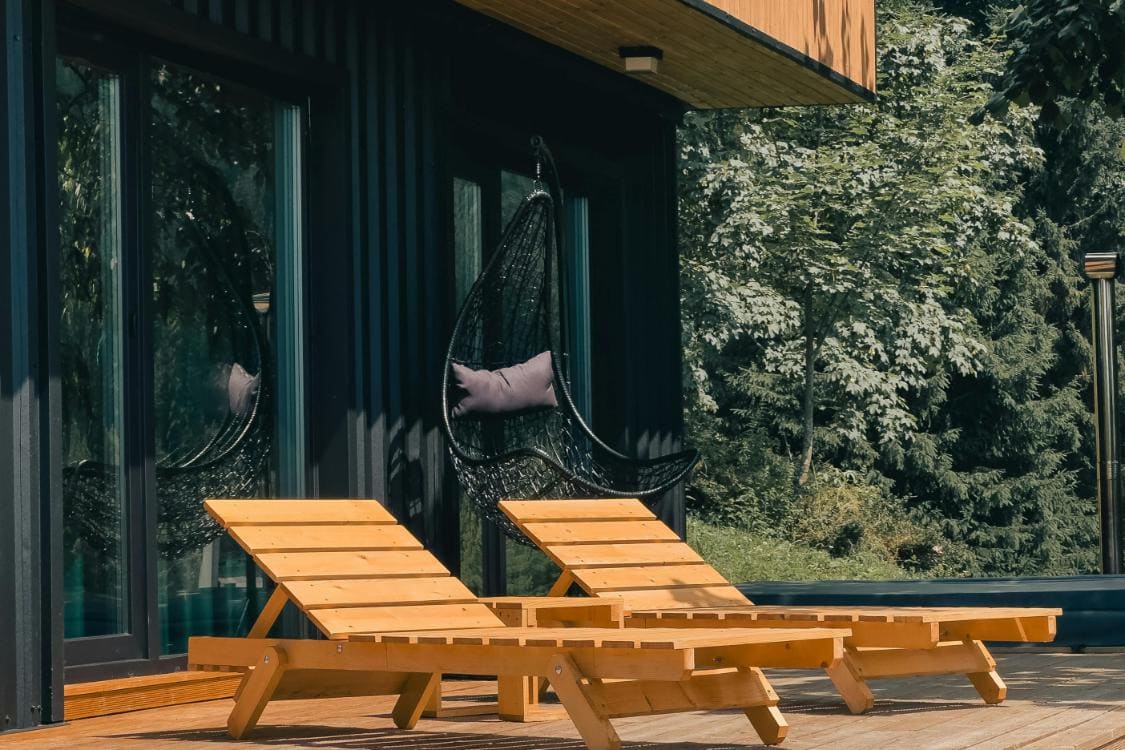
Thermally modified wood is heated in a controlled kiln to change its internal chemistry and make it more durable and stable. The process darkens the grain and reduces the wood components that attract moisture and fungi so the material resists rot and shrinks less in use.
For cladding and decking this means less maintenance and a longer interval between sanding and recoat jobs. Homeowners appreciate the natural patina that develops, giving each board a small story as it ages.
Anyone planning an outdoor project will often look at decking timber and materials at this stage, simply because durability and appearance go hand in hand.
Because the treatment uses heat rather than toxic preservatives, the treated boards are often allowed in sensitive applications such as playgrounds and water adjacent structures. The result is an option that performs like tropical hardwood without the ecological baggage and long shipping routes.
Craftspeople report that the surface machines cleanly and takes finishes evenly, which speeds finishing. It can be a solid pick for exterior parts where looks and long life both matter.
4. Wood Fiber Insulation Panels
Wood fiber insulation panels have come a long way from basic bales and loose fill to dense, engineered boards suited to walls and roofs. The boards trap air in a stable matrix so they resist heat flow while breathing well enough to let moisture move out of a wall without trapping damp.
That breathing helps timber structures avoid mold and rot when assemblies are well detailed, which keeps occupants healthier and walls last longer. The panels compress and cut easily so carpenters can fit them around services and inside cavities.
Manufacturers often source fiber from sawmill leftovers and small grade trimmings so the life cycle makes good use of material that once might have been burned. The product blends insulation performance with a natural fiber feel that builders find easy to handle and cut on site.
Because the boards have thermal mass they smooth out swings in temperature which can feel calmer in a bedroom during hot nights. All told the panels support a low carbon approach without asking for dramatic changes to familiar building methods.
5. Engineered Acoustic Timber Panels
Engineered acoustic timber panels are made to control sound while providing an attractive interior face that architects love. The panels are built with cores and perforations that trap and dissipate sound energy so living spaces and shared rooms are quieter without heavy treatments.
Wood veneers and pigmented finishes give designers a wide palette so the material can suit modern and traditional rooms alike. Installers can hang the panels on rails which makes service access simple and repair straightforward.
These panels are now also paired with thermal and moisture handling layers so a single element can help with temperature and acoustic control together. That kind of multi tasking reduces the number of layers inside a wall and speeds assembly.
For apartment buildings and homes with active households the panels cut noise between rooms and create more pleasant interiors where people can focus or relax. They show that timber can play a quiet but decisive role in how a house feels.